Sanction Checks: Why Modern Businesses Need Strong Compliance Screening in the United States
- venops431
- 52 minutes ago
- 3 min read

Businesses across the United States are facing increasing pressure to maintain strong compliance programs and reduce regulatory risks. One of the most important compliance processes today is conducting regular sanction checks.
Sanction checks help organizations identify individuals, vendors, suppliers, and entities that may be restricted or prohibited from doing business under federal or international regulations.
Healthcare organizations, financial institutions, insurance companies, and government contractors are increasingly investing in automated compliance solutions like Venops to strengthen sanction screening processes.

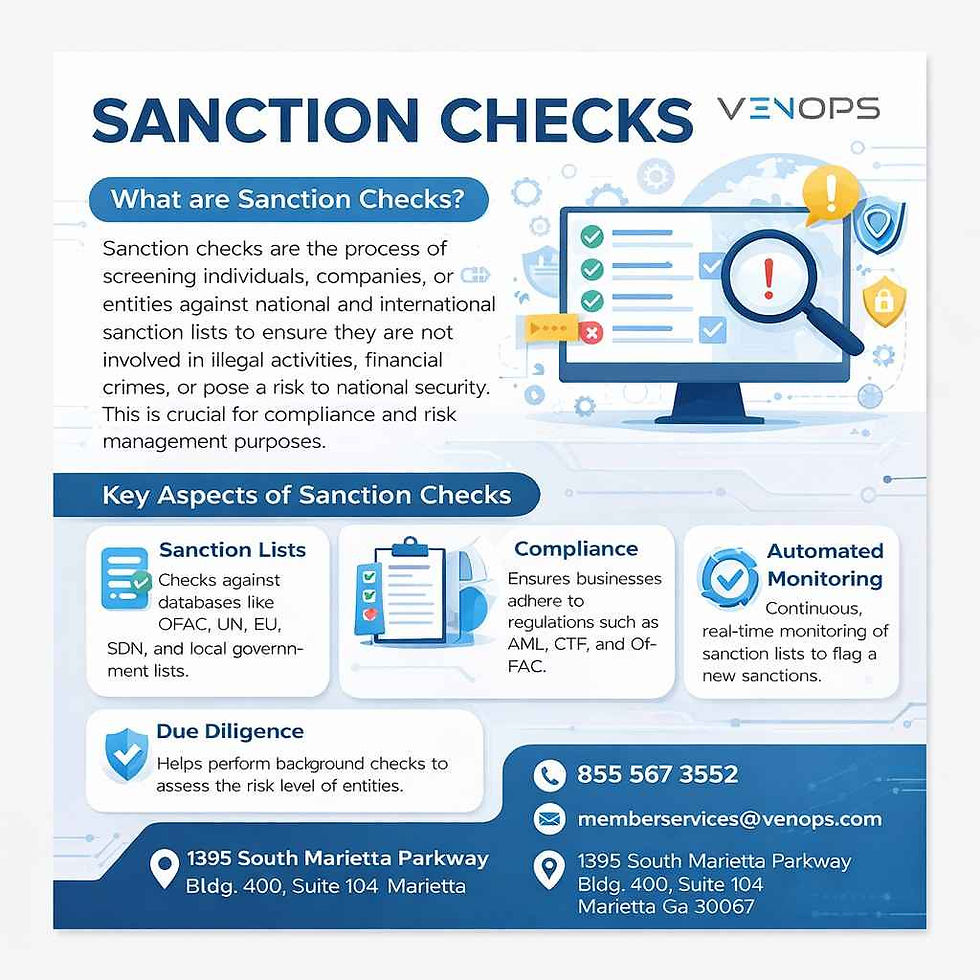
What are Sanction Checks?
Sanction checks are compliance screenings used to verify whether individuals or entities appear on government sanctions lists, exclusion databases, or regulatory watchlists.
Organizations conduct sanction checks to reduce risks related to:
Fraud
Financial crimes
Healthcare violations
Regulatory non-compliance
Vendor risks
Federal investigations
Sanction screening is now considered a critical part of enterprise risk management.
Why Sanction Checks are Important
Regulatory Compliance
Organizations must comply with federal regulations and industry standards.
Fraud Prevention
Sanction checks help identify high-risk individuals and organizations.
Vendor Risk Management
Businesses can reduce third-party risks by screening suppliers and contractors.
Financial Protection
Compliance failures can result in large penalties and legal costs.
Reputation Management
Strong compliance programs help organizations maintain trust and credibility.
Industries That Require Sanction Checks
Sanction screening is important across many industries, including:
Healthcare
Banking
Insurance
Government contracting
Pharmaceutical companies
Financial services
Technology companies
Manufacturing
Logistics
Telehealth providers
Types of Sanctions Lists
Organizations may screen against multiple databases, including:
OIG exclusion lists
OFAC sanctions lists
State Medicaid exclusion databases
International sanctions lists
Federal watchlists
Licensing databases
Comprehensive sanction checks help organizations reduce compliance risks.
Trending Compliance Challenges in 2026
Increased Regulatory Oversight
Federal agencies are increasing audits and compliance investigations.
AI-Driven Fraud Detection
Organizations are using AI-powered systems for real-time risk analysis.
Third-Party Risk Management
Vendor screening has become a major priority across industries.
Cybersecurity and Compliance Integration
Businesses are integrating compliance monitoring with cybersecurity programs.
Continuous Monitoring
Organizations are shifting toward automated continuous screening systems.
Venops helps organizations manage these evolving compliance challenges.
Manual vs Automated Sanction Checks
Manual Screening Challenges
Manual compliance screening often creates problems such as:
Slow processing
Human errors
Missed matches
Limited scalability
Poor audit management
High operational workload
Benefits of Automated Screening
Automated sanction screening systems provide:
Faster processing
Better accuracy
Continuous monitoring
Real-time alerts
Audit-ready reporting
Centralized compliance dashboards
Venops helps businesses automate sanction checks and improve compliance operations.
How Venops Supports Sanction Screening
Venops provides advanced compliance and sanction screening solutions for businesses across the United States.
The platform supports:
Automated sanction checks
OIG screening
Vendor compliance monitoring
Continuous risk management
Audit documentation
Real-time alerts
Regulatory reporting
Venops helps organizations improve operational efficiency while reducing compliance risks.
Best Practices for Effective Sanction Checks
Conduct Regular Screening
Organizations should perform ongoing compliance monitoring.
Screen Vendors and Contractors
Third-party screening is essential for risk management.
Maintain Compliance Records
Audit-ready documentation supports regulatory compliance.
Use Automated Technology
Automation improves screening speed and accuracy.
Train Compliance Teams
Employees should stay updated on changing regulations and sanctions requirements.
Future of Sanction Screening
The future of sanction checks will include:
Artificial intelligence
Machine learning compliance systems
Predictive analytics
Real-time database integration
Cloud-based compliance platforms
Advanced fraud detection tools
Businesses that modernize compliance operations today will be better prepared for future regulatory requirements.
Why Healthcare Organizations Prioritize Sanction Checks
Healthcare providers face strict federal regulations related to Medicare and Medicaid participation.
Sanction checks help healthcare organizations:
Prevent fraud
Reduce legal risks
Improve patient trust
Strengthen vendor compliance
Maintain federal funding eligibility
Healthcare compliance continues to be one of the fastest-growing operational priorities in the United States.
Conclusion
Sanction checks are now a critical part of modern compliance programs across industries in the United States. Businesses that fail to monitor sanctions and exclusion databases may face severe penalties, financial losses, and reputational damage.
As regulations become more complex, organizations are increasingly adopting automated solutions like Venops to improve compliance efficiency, reduce risks, and strengthen operational security.
Strong sanction screening programs help businesses stay compliant, protect their reputation, and build long-term trust with customers, regulators, and partners.


Comments